Thomson Hay Project
Ballarat Hospice
Client
Ballarat Hospice
Collaboration
Morton Dunn Architects
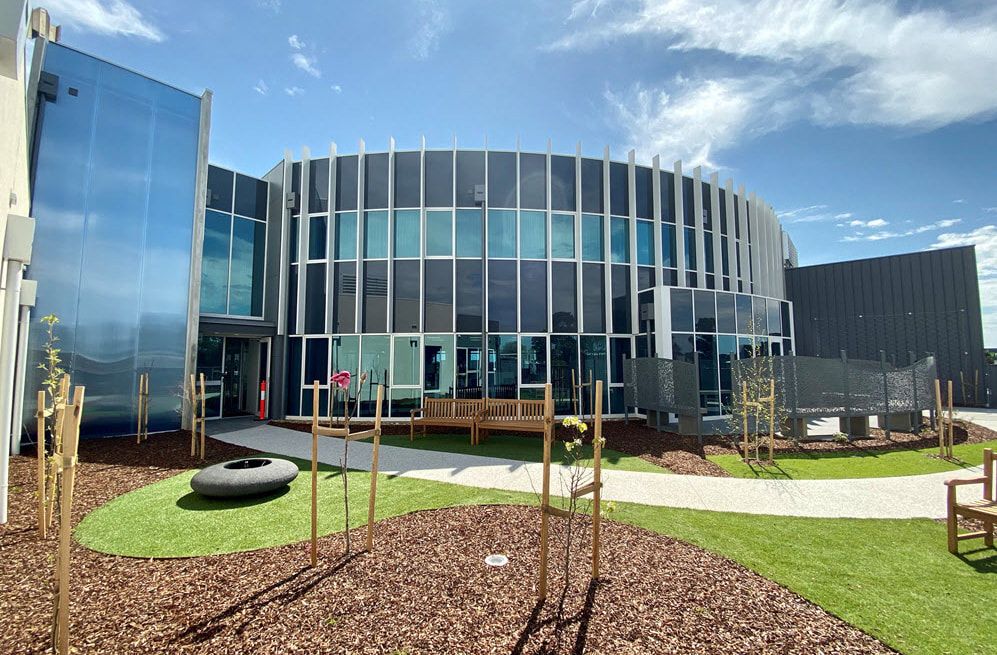
For the Ballarat Hospice Facility, we delivered a cohesive therapeutic landscape that transforms the site into a series of meaningful spaces for reflection, movement and connection. Working with Morton Dunn Architects, the design integrates sensory gardens, accessible pathways, bespoke seating, public art elements and resilient planting to create an enduring environment that supports the wellbeing of patients, visitors and staff.
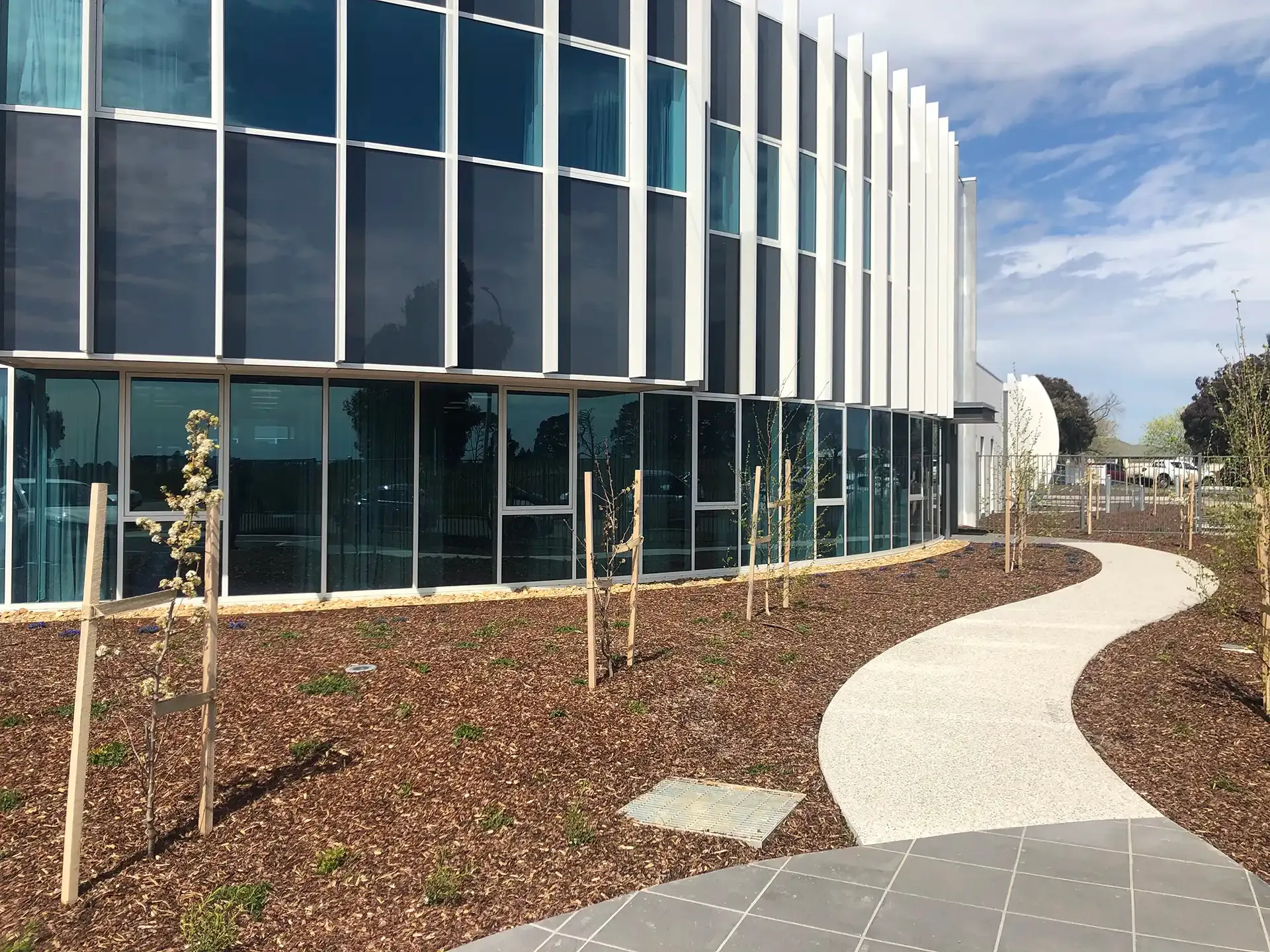
The landscape has been designed as a series of restorative outdoor spaces surrounding the car parks, main entry and secondary garden entries. Together, these areas offer opportunities for quiet reflection, gentle movement, relaxation and connection with gardens.
A meandering path through the northern garden creates a peaceful, forest-like walking experience. Feature trees and layered shrub planting are arranged across gently contoured landscape mounds, providing seasonal interest, shade and a sense of enclosure.
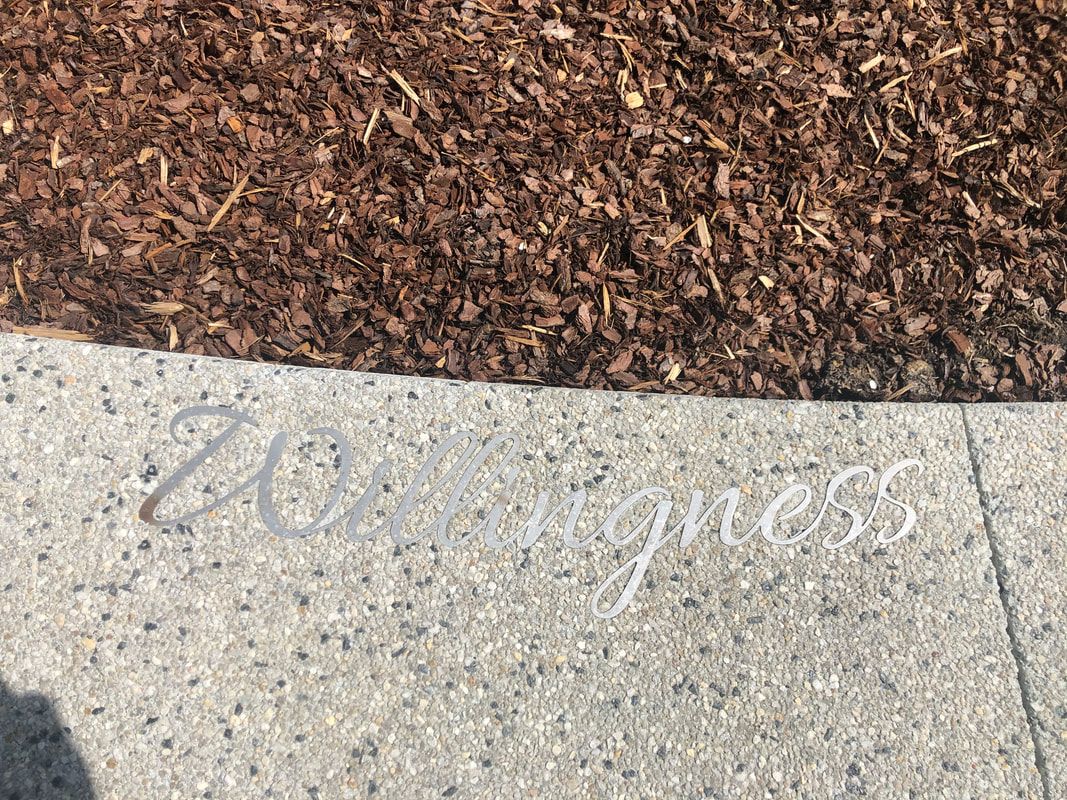
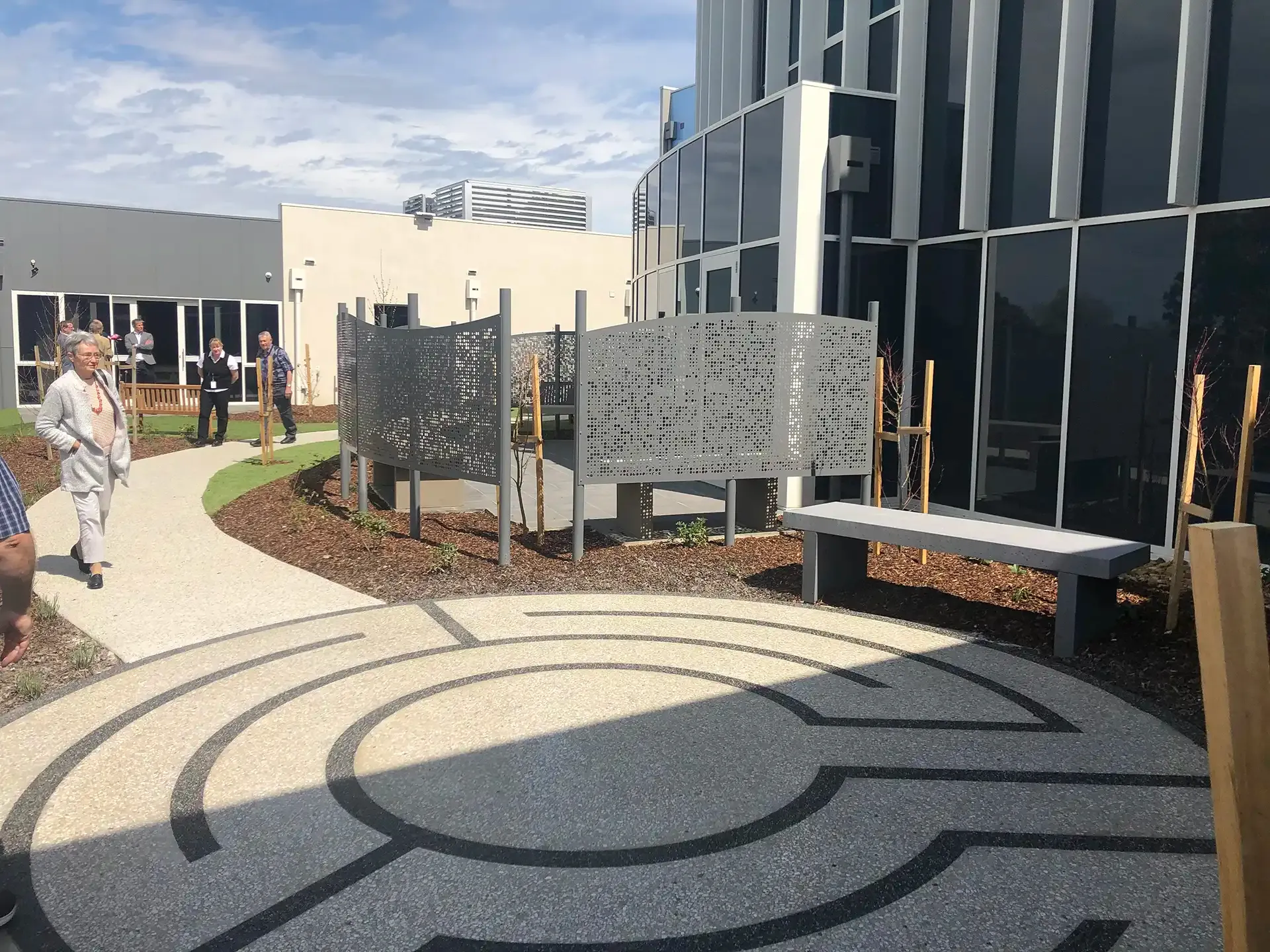
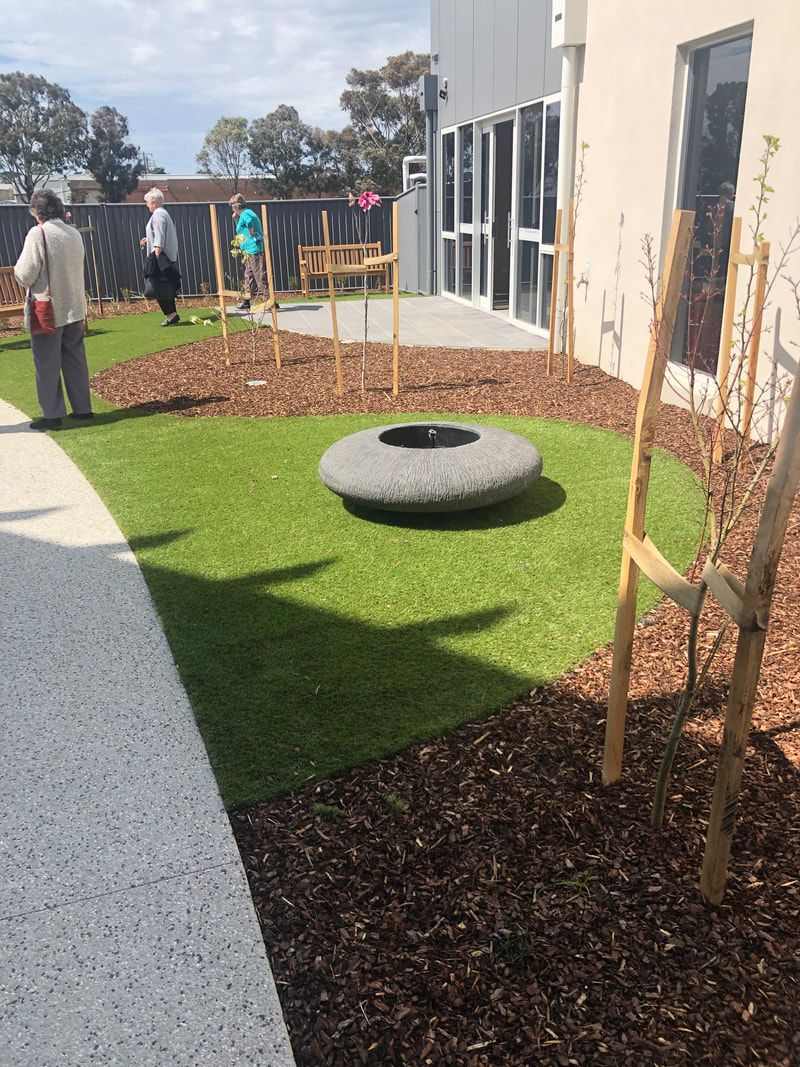
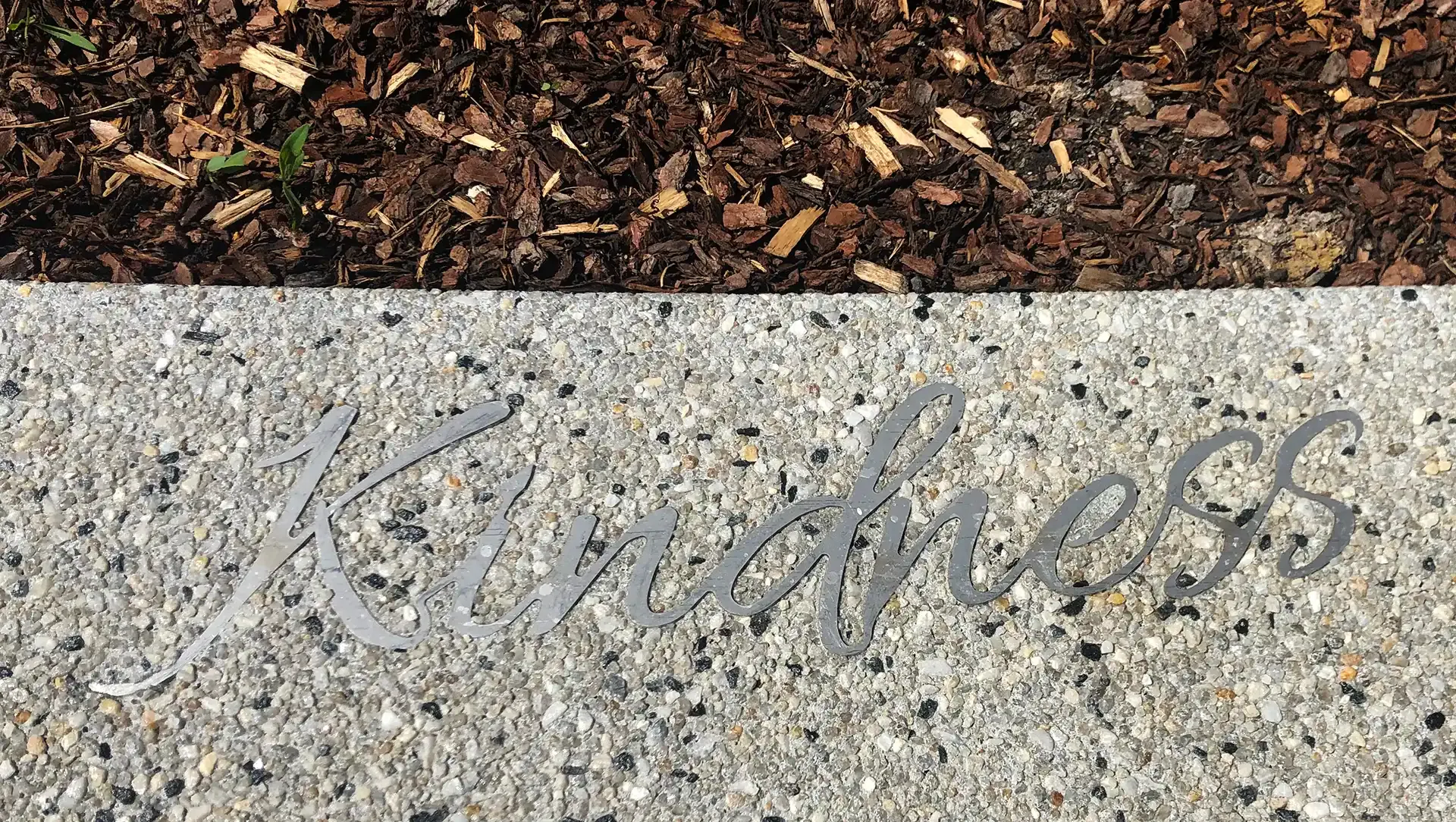
The southern garden incorporates a simple curved pathway with custom laser-cut stainless-steel lettering integrated along its edge. A contemplative labyrinth, formed from dark-coloured pebbles and exposed aggregate paving, provides a place for slow movement and reflection. A small water fountain adds a sensory dimension through the sound, movement and touch of water.
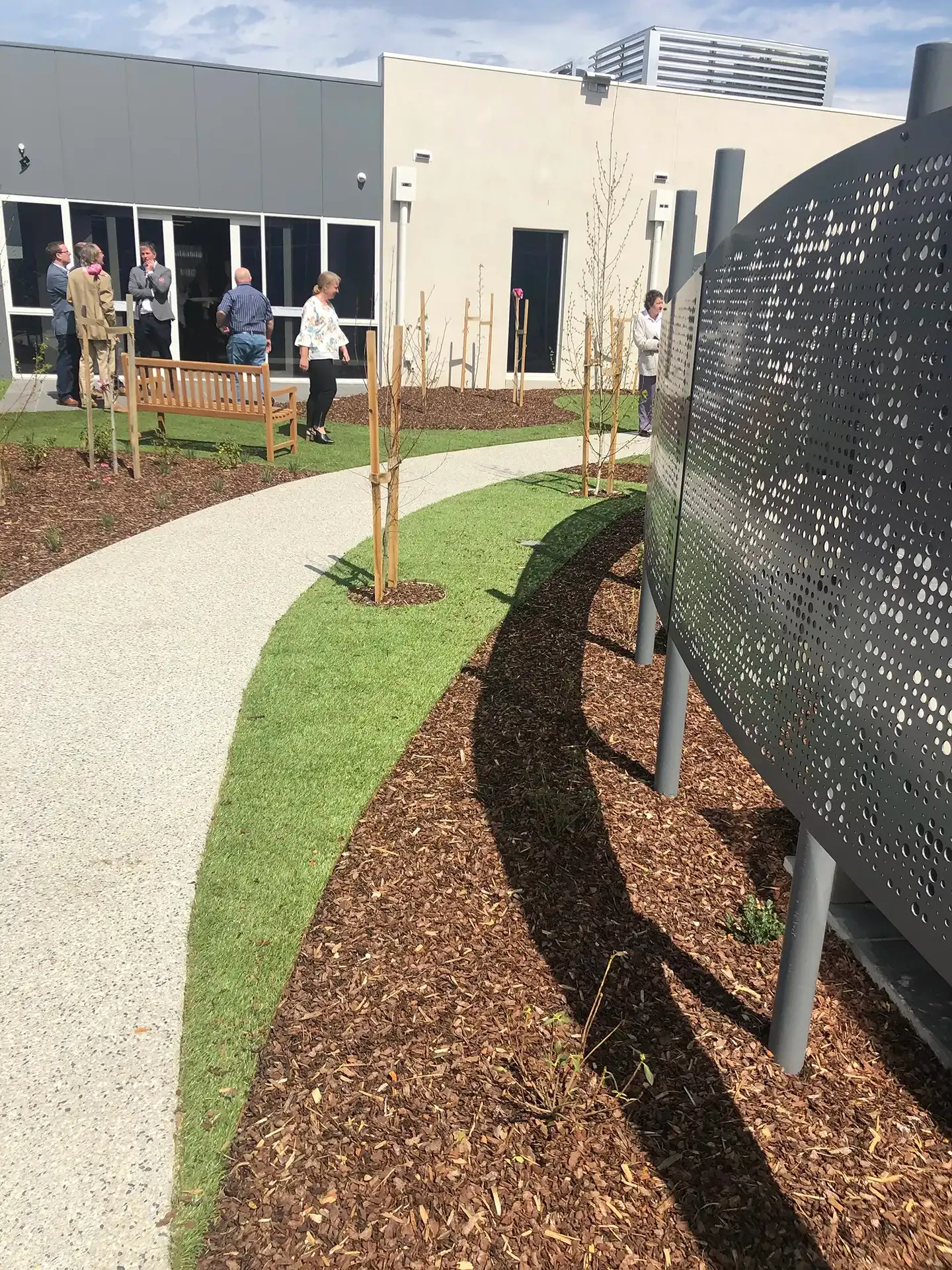
Bespoke landscape elements further enrich the outdoor setting, including a custom pic-perf screen enclosing the staff seating area and curved seating walls that create comfortable spaces for rest and informal gathering.
At the main entry, planting responds to the building’s geometry through curved and radial planting patterns that reinforce the architectural form. Plant species within the car park have been selected for their resilience, low-maintenance requirements and suitability to Ballarat’s local climate.
The considered integration of planting, materials, furniture and finishes creates a calm sensory environment that supports both passive and active engagement with the landscape.